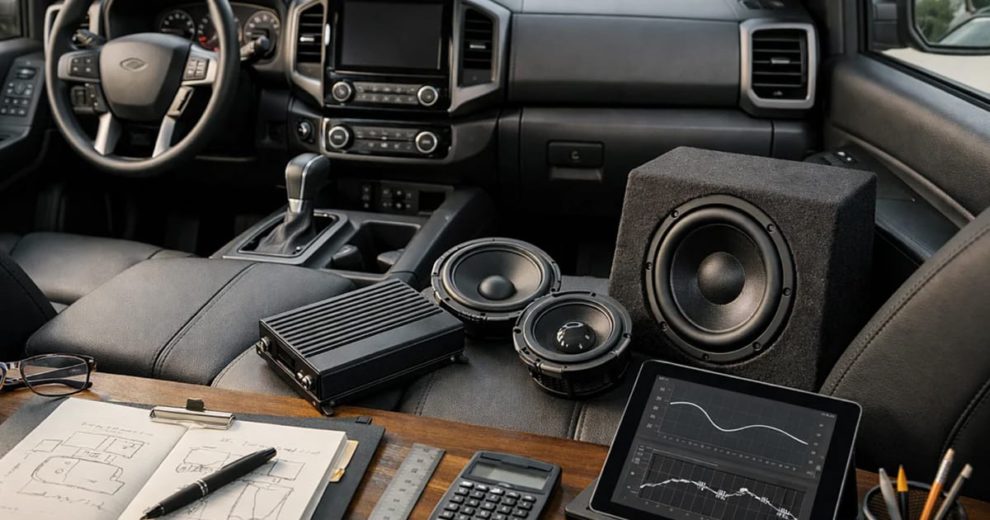
A quality car audio system can make daily commuting, weekend travel, and long highway drives more enjoyable. Many factory systems provide acceptable sound, but music lovers often want clearer vocals, stronger bass, better balance, and greater control over volume and tone.
The best upgrade does not always require replacing every component. Small changes can improve sound while protecting the vehicle’s electrical system and interior design. Owners should begin by identifying what feels missing. Some systems lack clarity, while others need stronger low-frequency performance or better speaker placement.
Audio upgrades should also fit the wider household budget. Vehicle improvements may compete with maintenance, property expenses, and home insurance planning, so drivers should set a realistic spending limit before purchasing equipment.
A thoughtful upgrade can provide years of enjoyment without creating unnecessary complexity.
Evaluate the Factory Audio System
Begin by listening carefully to the existing system.
Play several familiar songs.
Choose music with vocals, bass, acoustic instruments, and detailed high frequencies.
Notice whether sound becomes harsh at higher volume.
Listen for distortion, weak bass, unclear voices, or uneven sound between seating positions.
Adjust factory tone controls before replacing equipment.
Small changes to bass, midrange, treble, balance, and fade may improve performance.
Turn off unnecessary sound effects.
Some systems use artificial surround settings that reduce clarity.
Check whether poor sound comes from low-quality streaming settings.
Higher-quality audio files may improve results without hardware changes.
Upgrade the Front Speakers First
Front speakers create much of the sound heard by the driver and front passenger.
Replacing them may provide a noticeable improvement.
Choose speakers designed for the vehicle’s size and mounting depth.
Check electrical compatibility.
More expensive speakers do not always perform well with a low-powered factory system.
Ask whether an external amplifier is required.
Component speaker systems separate the woofer and tweeter.
This can improve sound placement.
Coaxial speakers combine several elements into one unit and may simplify installation.
Families planning vehicle purchases and household improvements may find useful budgeting ideas through first-home ownership guidance.
Consider Adding an Amplifier
An amplifier provides additional controlled power to speakers.
More power can improve clarity at moderate and higher volumes.
It may also reduce distortion when matched correctly.
Do not select an amplifier only according to the largest advertised number.
Review continuous power ratings.
Match the amplifier with speaker requirements.
Installation should include suitable wiring, fuses, grounding, and ventilation.
Poor electrical work can create noise, overheating, battery concerns, or damage.
Professional installation may be valuable when the upgrade involves several components.
Add Bass Without Overpowering the Music
A subwoofer handles lower frequencies.
It can add depth to drums, bass guitars, electronic music, and movie soundtracks.
Large subwoofers are not required for every vehicle.
Compact powered models may fit beneath a seat or inside a small cargo area.
Truck owners may choose enclosures designed for limited cabin space.
Consider how much cargo capacity should remain available.
Bass should support the music rather than cover vocals and instruments.
Adjust gain and crossover settings carefully.
Excessive bass can create vibration and listener fatigue.
Improve Sound With Better Door Treatment
Vehicle doors contain large metal and plastic surfaces.
These areas may vibrate when speakers operate.
Sound-deadening materials can reduce vibration and road noise.
They may also help speakers produce tighter sound.
Apply suitable automotive products.
Avoid blocking drainage openings, wiring, airbags, or moving window components.
More material is not always necessary.
Strategic placement may provide useful results.
Owners organizing garages and vehicle projects may find practical ideas through home improvement and organization resources.
Replace the Head Unit Carefully
The head unit controls audio sources, volume, connectivity, and system settings.
An aftermarket unit may add smartphone integration, navigation, improved sound controls, or additional inputs.
Modern vehicles can connect climate controls, cameras, steering-wheel buttons, safety settings, and vehicle information to the factory display.
Replacing the unit may require special adapters.
Research compatibility before purchasing.
Confirm support for factory cameras and controls.
Avoid removing important vehicle functions solely to gain entertainment features.
Professional installation may preserve more original equipment.
Improve Smartphone Connection Quality
Wireless streaming provides convenience.
A wired connection may offer more stable performance in some systems.
Update the phone and vehicle software.
Use high-quality cables.
Remove damaged connectors.
Check music application settings.
Some services reduce audio quality to save mobile data.
Higher-quality streaming may improve clarity.
Download playlists before travel through areas with weak service.
Keep phone placement safe.
Drivers should avoid changing music settings while moving.
Use voice controls or passenger assistance when available.
Set Equalizer Controls Gradually
Equalizers adjust different frequency ranges.
Large changes can create unnatural sound.
Begin with small adjustments.
Reduce unpleasant frequencies before heavily increasing others.
Listen at normal driving volume.
A system tuned while parked may sound different on the highway because of road noise.
Save several settings when the equipment allows it.
Different music styles may benefit from different adjustments.
Avoid copying settings from another vehicle.
Speaker placement, interior materials, and cabin size influence results.
Protect Hearing During Long Drives
Clean sound does not require extreme volume.
Long exposure to loud audio can cause hearing damage.
Road noise may encourage drivers to increase volume without noticing.
Reduce volume during long trips.
Take listening breaks.
Avoid setting bass so strongly that mirrors, trim, or body panels vibrate continuously.
Passengers may have different comfort levels.
Keep emergency sirens, horns, and surrounding traffic audible.
Music should improve the driving experience without reducing awareness.
Maintain Safe Electrical Installation
Car audio equipment adds electrical demand.
Large amplifiers may require upgraded wiring or charging-system evaluation.
Do not install oversized equipment without understanding vehicle capacity.
Use suitable fuses near power sources.
Protect wiring from heat, sharp metal, moisture, and moving parts.
Secure cables.
Poor grounding may create unwanted noise.
Loose connections can generate heat.
Electric and hybrid vehicles may require special procedures.
Use technicians familiar with the specific vehicle.
Keep the Interior Practical
Audio upgrades should not interfere with passengers, airbags, cargo, or visibility.
Secure every enclosure.
A loose speaker box can become dangerous during sudden braking.
Avoid placing equipment where it blocks seat movement.
Protect wiring beneath carpets and trim.
Maintain access to spare tires and emergency tools.
Choose equipment that fits daily needs.
A family vehicle may require a different setup than a show car.
Compare Professional and Home Installation
Simple speaker replacement may be manageable for experienced owners.
Complex systems can require electrical knowledge, specialty tools, and careful interior disassembly.
Professional installers may provide warranties.
Ask about experience with the vehicle model.
Request a written estimate.
Understand which parts are included.
Ask whether factory components will be returned.
Review tuning services.
Keep installation records.
Drivers can follow home and lifestyle updates while considering future vehicle and household projects.
Avoid Buying Only by Brand Name
Well-known brands may offer quality equipment.
Performance still depends on compatibility, installation, tuning, and vehicle design.
Compare specifications.
Listen to demonstration systems when possible.
Read warranty information.
Ask whether replacement parts remain available.
Do not assume the highest price creates the best sound.
A balanced system often performs better than one expensive component connected to weak supporting equipment.
Upgrade in Stages
Drivers do not need to purchase everything at once.
Begin with the weakest area.
Replace speakers.
Improve tuning.
Add an amplifier when needed.
Consider a subwoofer later.
Staged upgrades help owners understand which changes provide the greatest improvement.
They also reduce financial pressure.
Keep notes about equipment and settings.
Car audio should make music more enjoyable without creating distraction or damaging the vehicle.
USA music lovers can build a stronger system by choosing compatible speakers, using safe installation methods, and tuning sound according to the vehicle’s interior. A clear, balanced system often creates more satisfaction than maximum volume.